


It’s 11am in the West Village.
Kiki Couchman is walking down the street, hauling a bright-blue backpack full of yogurt.
She’ll stop at an office, then at a grocery store, then a cafe, to drop off anywhere from 25 to 100 cups of yogurt. On any given day, she’ll make a dozen of these stops, while capturing 0.5x zoomed microclips for the day-in-the-life vlogs that she films from the back of a CitiBike.
Kiki has self-described “oldest daughter syndrome,” which means she’s always done the “right thing.” Until Sourmilk. When she quit her job in private equity a year ago, Kiki went from being a respectable Stanford grad hustling her way up the corporate ladder to an early-stage probiotic guru and up-and-coming influencer, whose signature accessory is a giant blue backpack full of yogurt.
Kiki shares a name with the heroine of the iconic 1999 Miyazaki film, Kiki’s Delivery Service. In the Miyazaki film, Kiki is a young witch who starts a courier service, flying all over town on her broomstick with a black cat in tow. And her dress is the exact color blue as the package of a Sourmilk yogurt cup. The real-life Kiki is a startup founder, not a magical courier. But they both spend their days delivering things.
Trust your gut
The yogurt thing happened sort of by accident.
Kiki and her cofounder, Elan Halpern, were best friends at Stanford. Kiki studied human biology, and Elan was a D1 athlete, so both of them were serious about taking care of their bodies. In April of 2024, they both independently sensed an impending career transition, and started chatting about what their next steps might be. “And we both realized we wanted to be in the health space,” said Kiki.
Kiki and Elan were living together as roommates when Elan started her fateful sideproject: making yogurt to heal her gut. Homemade yogurt, made via an extended fermentation process, contains more probiotics than normal, store-bought yogurt. It also has less lactose, which makes it easier to digest. Plus, it won’t have any sugars, thickeners, or preservatives messing with those beneficial microbes. Elan was mixing up a veritable gut-boosting ambrosia, the kind that would make an Andrew Huberman or a Gwenyth Paltrow weak in the knees, right there in their kitchen. But at that point, it was just for herself.
One morning, Kiki was doing a puzzle alone on her coffee table. Elan came in and said, all of a sudden, “Kiki, I have this idea. I think we need to scale yogurt.”
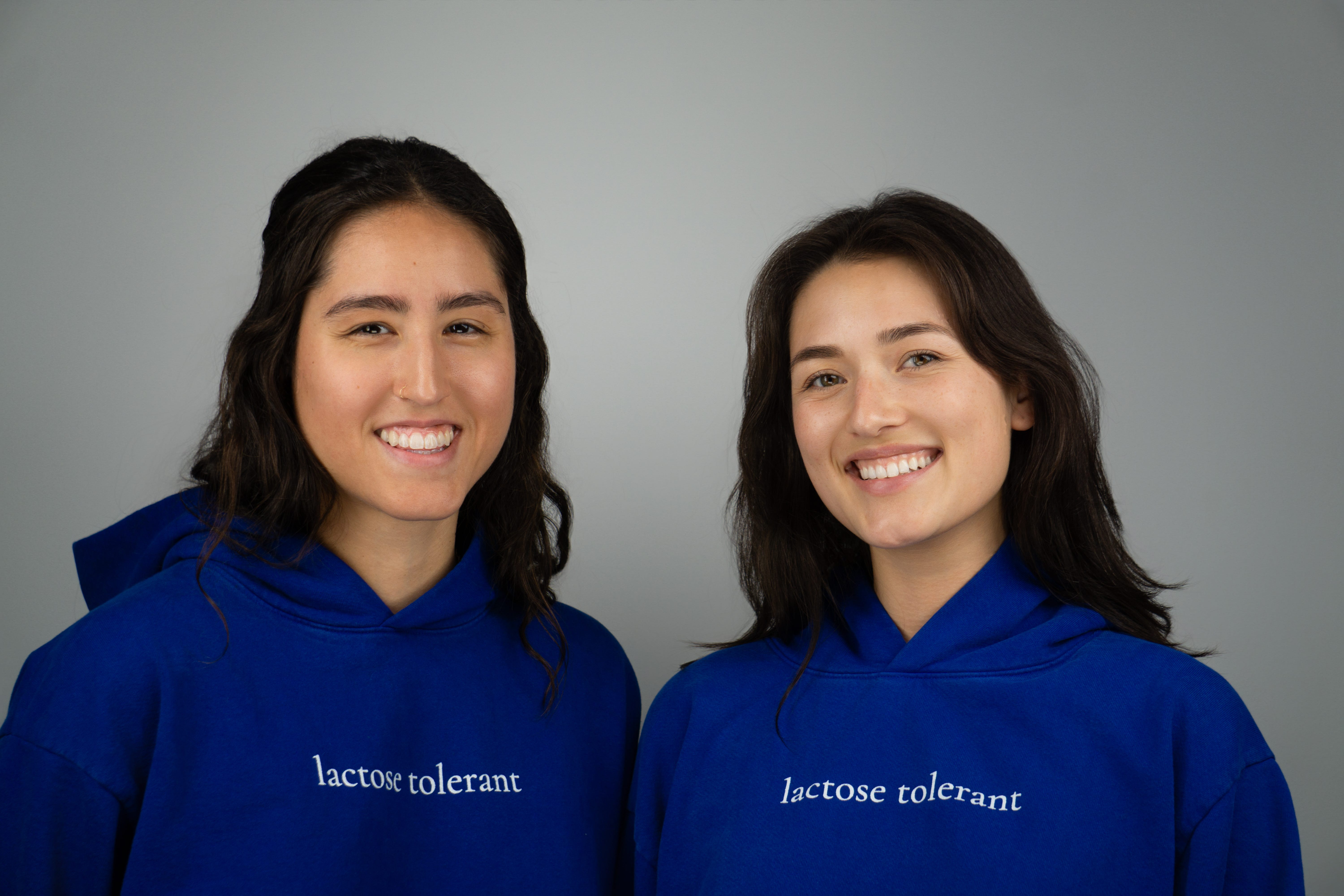
What if you could put the thing that heals you in all of your food?
And that’s the Sourmilk thesis.
Day in the life
Kiki starts her day early.
At 7:30, she’s at the gym. By 9:30, she’s trekking over to Long Island City to pick up the day’s supply of yogurt from their warehouse. From 10:30 to 12:30 she’s delivering yogurt to offices, cafes, and workout studios. Then from 12:00 to 3:00, she’s delivering to grocery stores, zigzagging back and forth across Manhattan on her CitiBike.
At 3:00, she comes home, and spends two hours doing admin. Then from 6:00 to 8:00 she bops over to some kind of Sourmilk evening event, a trendy pilates popup or a bustling holiday market. Then at 8:00, she comes home and makes a video. Rinse and repeat.
In the early stages of Sourmilk, Kiki was constantly obsessing about scale. Before she would make a decision, she would ask herself — is this decision scaleable? Will this process still work if we have 10x more customers? 100x?
It was at this point that a founder friend staged an intervention. “Don’t even think about scale,” he said. For now, focus on what’s in front of you. “You will not have any customers tomorrow if you don’t make the decision that is best for those customers right now. So don’t even think about it.” “The scalable decision…that will come. You will face that mountain when it gets here. But the mountain in front of you is those ten customers right now.”
So Kiki and Elan threw scale to the wind, and adopted what they’ve called the “drug deal model” of yogurt distribution (which just as easily could have been called Kiki’s Delivery Service). No outsourcing, no modular logistics chain, no robot couriers: just Kiki on her CitiBike, Manhattan’s very finest probiotic plug.
When the milk goes sour
I asked Kiki what the hardest day for the company was.
She told me about a time earlier this year when she and Elan traveled five hours upstate to collect a giant round of yogurt. Each round takes three days to complete and produces several thousand cups of yogurt.
When they’d finally arrived all the way upstate, and tasted the yogurt, something just wasn’t quite right. The formula was all set, but something had been tweaked ever-so-slightly in the production process. The result? Yogurt that tasted… just a little bit wonky. Or to use Kiki’s words: “it was awful.”
Kiki and Elan faced a tradeoff. Do they drive the thousands of cups of wonky yogurt back to the city, pay the money to store it, and watch the light temporarily depart their customers’ eyes as they taste the yogurt that has embraced, perhaps too literally, the name of the brand?
Or do they eat it?
In the end, they threw away the yogurt. All 3000 wonky cups of it. They hauled all that yogurt to the dumpster and they said sayonara. “It was ridiculous,” said Kiki. “But once we committed and decided, we could be funny about it. It could be a whole bit.”
It was a huge loss to throw away all that food. Kiki even had to strategize about how she would break the news to her followers; just in case the Food Waste people decided to get involved. But it would, in the long run, do more harm to the brand to distribute a product that wasn’t meeting their quality bar. So that’s why, when SourmilkPocalypse hit, Kiki and Elan thought about the customers, first. Goodbye, wonky yogurt.
Playing on hard mode
When Kiki was deciding whether to quit private equity and embark on her probiotic Odyssey, she consulted a council of trusted elders who knew a thing or two about starting a business.
Their advice pretty much boiled down to the same thing. Whatever you do, “don’t do this.”
The logic was clear. “Consumer in general is really, really hard. Specifically food.” “Now that I’m in the industry, I know exactly where the advice is coming from,” said Kiki.
In order to start making real money selling food to consumers, you need to be incredibly scaled. As a local operation, “you make no money. If a tech company sells a contract to another company, they could make $100k in a single transaction. That’s a lot of yogurt.
Wanna make it even harder? Make it an animal product, make it refrigerated, and give it a quick expiration date. “Cool, I chose all three,” said Kiki.
But there are a couple of subtle factors that make the Sourmilk strategy different.
First of all, not many other founders are trying to riff off of yogurt. This gives Sourmilk a bit of a moat. “You see people doing frozen yogurt, you see people doing coffee drinks,” said Kiki. But there are “very rarely any new yogurt brands.”
Second of all, yogurt is a product that’s consumed almost every day. “People buy yogurt at a much higher rate than they buy chips on the shelf,” said Kiki. Once you get people to convert, they’re gonna be buying your product just about every time they go to the grocery store.
And finally, Sourmilk is not just about flavor; it’s about health. The internet is awash with recommendations for improving your gut health. But many of these suggestions are difficult to put into practice. Like fasting for sixteen hours every day. Or consuming 30 different plants every week. Or never exposing yourself to stress. But yogurt? That’s pretty simple. Slap it in a smoothie, mix it into a dressing, or eat a big bowl of it for dinner.
If you walk through the aisles of a trendy Manhattan grocery store to find the yogurt section, you’ll notice Sourmilk right away. The electric Sourmilk blue cuts straight through the columns of demure beige. Kiki and Elan designed it this way; they ran a bunch of different tests to figure out which color would stand out the most given the current status-quo color palette for upscale health-forward yogurt. Look at me, says Sourmilk, I’m just a little bit different.
Crossing the cringe threshold
A year ago, Kiki was just a normal person who posted on Instagram twice a year. She had two thousand followers.
Since starting Sourmilk, she’s amassed nearly ten times that. And her 20k followerssee posts from Kiki nearly every day.
To get there, Kiki had to cross the proverbial cringe threshold, that zone of being seen trying-and-not-yet-succeeding. For Kiki, this meant tolerating the discomfort of her Stanford peers, her corporate coworkers, and her friends from elementary school witnessing her arc from respectable private equity grindmaster to aspiring yogurt influencer girlie.
To be cringe is to be seen trying and failing. And if the goal of content creation is to build a following, and everyone starts out at zero, then that cringe threshold is one that every content creator needs to cross. Some might get lucky and be swept over quickly by the mercurial tide of virality. Others are forced to spend months in the mines of the algorithm before they get any traction.
I asked Kiki whether she ever felt stuck on that cringe threshold.
“Totally,” she said. “So many times.”
To get over it, Kiki adopted a couple of principles.
Principle one: commitment. You can’t actually know whether or not your social media presence is viable until you’ve actually spent enough time posting. Unfortunately, this involves exposing yourself to the icy gusts of the cringe threshold. When Kiki started the Sourmilk social media presence, she told herself she had to post every day for three months. With that commitment in mind, the cringe threshold becomes less daunting. It’s about the follow-through, not the response.
Principle two: authenticity. When she posts, Kiki asks herself, “How do I make sure this is my authentic voice?” Anything that she posts online needs to feel like it came out of her head. “I wouldn’t be able to do this if it wasn’t authentic,” she said.
Principle three: purpose. At the end of the day, Kiki asks herself, “What do I want? Why am I doing this?” And the answer is clear. “I’m doing this because I want Sourmilk to be successful. I’m not trying to be an influencer. I’m trying to build a platform and build an audience. I’m doing this so I don’t have to pay an influencer to do this. So I have full control over what our brand and our message is.”
“And I care way more about whether Sourmilk is going to be successful than about whether or not someone is cringing.”
Brand strategy
When Kiki walked me through her daily schedule, my first question was how she managed to fit a mid-sized content creation empire into a GCal that looks like a pro game of Tetris.
“The strategy is that I have to plan it out,” she said. And, like most other things in her life, she gets it done on the go.
Kiki’s jam-packed early-stage-startup-founder daily agenda means that she doesn’t have a whole lot of time for dedicated content creation. A traditional influencer might block out hours at a time to film atmospheric matcha-soaked morning routine rituals. For Kiki, this is not an option. “If I have to sit down and talk to a camera, it takes a long time.” Anything she does needs to fit into whatever is already on the agenda. Day in the life stuff is good because “it fits into the daily routine. She’ll film about 40 clips in any given day, edit them down, and voiceover the entire thing.
Kiki may be part of the vanguard shaping the next generation of content trends. As we close in on 2026, the lifestyle influencer brand has become a bit passé: the market oversaturated, the daily routines so obviously choreographed and false. Consumers are ready for a new kind of influencer, someone whose content is based around doing instead of just pretending to do. Kiki’s content is authentic, funny, and raw. She doesn’t have time to spend hours and hours perfecting her lighting or choreographing her morning breakfast routine. She’s got yogurt to deliver.
Her crazy schedule might actually be part of what makes her content so good. In what is increasingly a mimetic simulacrum, Sourmilk is a refreshing taste of real life. Sure, it’s still pixelated shortform content coming at you through a screen. But it’s a girl on a mission, showing up every single day with a bigger goal in mind. It’s this relentless energy and momentum that makes Kiki so engaging as a founder and as a person. It’s the reason she’s amassed almost 20,000 followers posting almost exclusively about yogurt. She’s got her eyes on the prize. And she’s moving fast.
Still, despite the unfilteredness, there’s still something remarkably cohesive about the Sourmilk brand: the design, the content, the narrative strategy. I asked Kiki about this, about how she planned it all out. In my head, I saw Canva moodboards, Midjourney mockup concept art, maybe even a small stack of trendy handbooks on design principles. “How did you decide what the vibe was gonna be?” I asked.
Turns out there’s no Sourmilk MegaPlan. The aesthetic and narrative brand is just, “you know, out of my head every day.” There was no grand strategy, no big visionboard, no neatly itemized brand agenda. Kiki just posts stuff that feels right to her. The result: a visually cohesive, narratively compelling brand to leverage this hot new consumer product.
The one rule that Kiki does follow is this. She asks herself: “How do I make sure everything I put into the world is valuable?” “I don’t need another thing clogging up your feed,” she said.
Aspiring content creators stuck in the far recesses of the Alo-set-matcha-pilates matrix might do well to follow in Kiki’s footsteps. Find an awesome mission, and share — honestly — about the journey. Kiki doesn’t need a brand strategy because she is the brand, and her real voice and day-to-day challenges are way more compelling than anything you could map out on Pinterest.
I asked Kiki what she thinks are the biggest mistakes people make when they’re trying to start a business. “There are so many people who wait until something is perfect in order to do anything. The only difference between me and someone else is that I decided to take the leap and do it,” she said. “Just do it. Just post that thing. What are you waiting for?”
In Miyazaki’s film, the only way the magic-witch Kiki can get around town is with her broomstick. Which means that every time she needs to get somewhere, she leaps in the air. The entire Sourmilk journey has been a series of these (metaphorical) micro-leaps: defying business-school wisdom, the obsession with scaling, and the gravity of the cringe threshold in order to keep showing up at your doorstep each day, backpack full of yogurt.
