

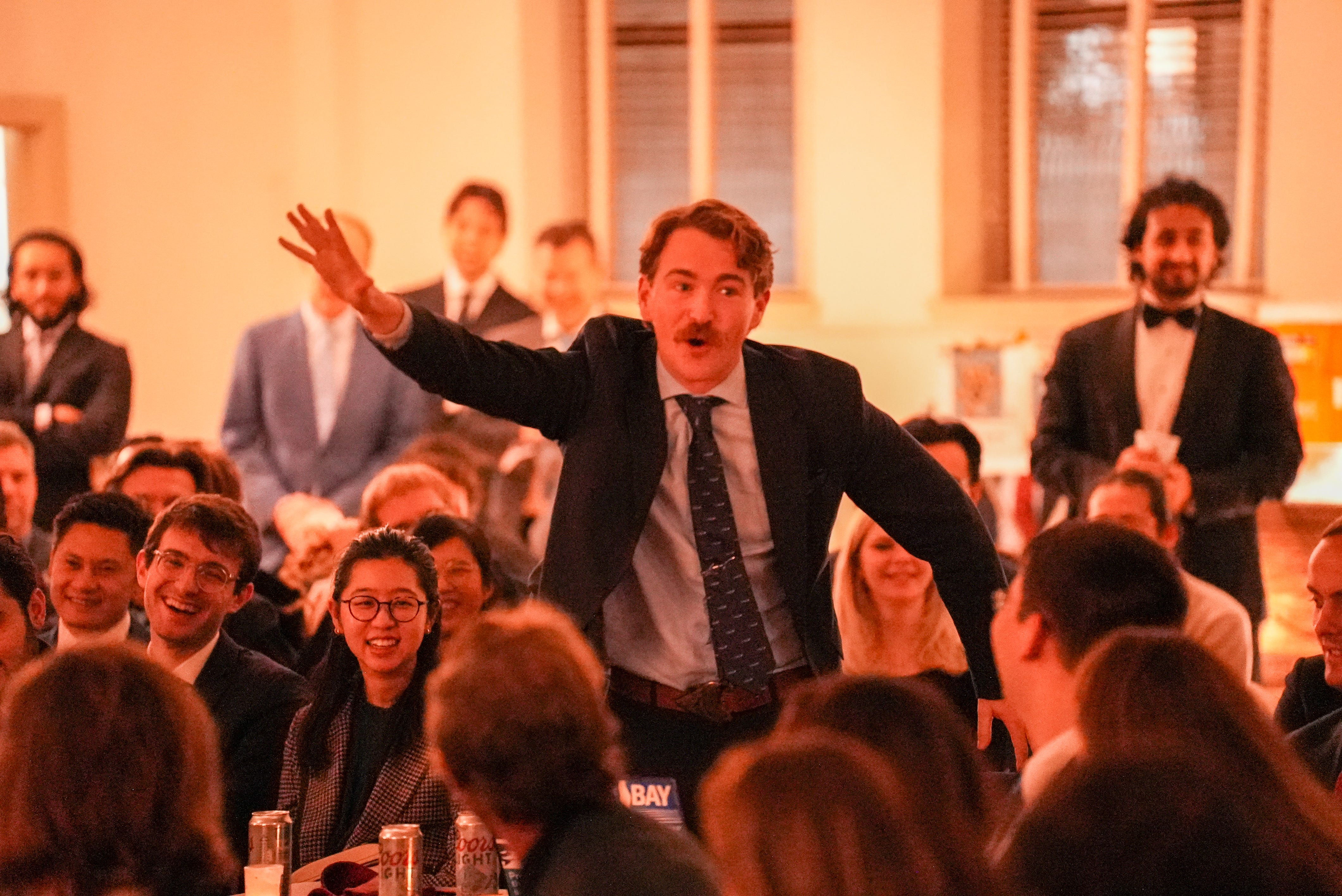
I meet Will O’Brien at a party in San Francisco. He’s wearing a two-piece suit. Sixty seconds into the conversation, when he finds out that I’m Catholic, he throws open his suit jacket to reveal the shirt underneath: white linen emblazoned belt-to-collar with the Virgin Mary.
Will is also carrying around at least a dozen small plastic rosaries wrapped in clear plastic packaging, the kind of thing you’d hand out at a school fair. Just moments after he unveils his trademark Vatican attire, he is unsheathing one of these rosaries, and is jovially forcing it over the head of my non-denominational friend. A baptism, of sorts. Welcome to San Francisco.
At sixty seconds into our interaction, Will showed me Our Lady of Guadalupe. At ninety seconds, he rosary’d my friend. Now, at five minutes, he’s pulling out his phone to show me a list of his favorite conspiracy theories. UFOs are big. So is the JFK assassination, and telepathy. He also tells me about St. Joseph of Cupertino, a levitating saint local to the San Francisco Bay. TradCath though I claim to be, this was the first I was hearing of the Flying Friar.
Halfway through the list, Will is loudly summoned across the room by another group. This dynamic continues throughout the night. Everyone, it seems, wants to be in the radius of this ebullient Irish cowboy. This is, to me, unsurprising. Will possessed in abundance the thing that San Francisco tech people so desperately lack: the ability to have a good time.
Robots, underwater
Will was not the sort of person you’d expect to meet at an event like this. Will broke into that dimly-lit room of San Francisco denizens with the explosive energy of Elon’s Southaven datacenter or a benevolent, orange-mustachio’d Genghis Khan entering the battlefield. His huge smile and raucous laugh cut through the introverted, self-conscious comportment and flat, transactional parlance of the SF Tech Guy like the Point Bonita lighthouse cuts through the fog rolling over the Golden Gate.
Will had arrived in San Francisco just a few months earlier, at the helm of the fledgeling startup, Ulysses. Ulysses, the company, like Will O’Brien himself, is an outlier in the SF tech scene. The startup world can easily seem like a monoculture: hordes of bit-based enterprises battling ruthlessly to differentiate. Ulysses, however, doesn’t have to try that hard to seem different. In a world where everything is digital, Ulysses is refreshingly material.
The technical term for what Ulysses builds is “autonomous vehicles” for “scalable operations on the surface and in the subsea.” The nontechnical term: ocean robots.
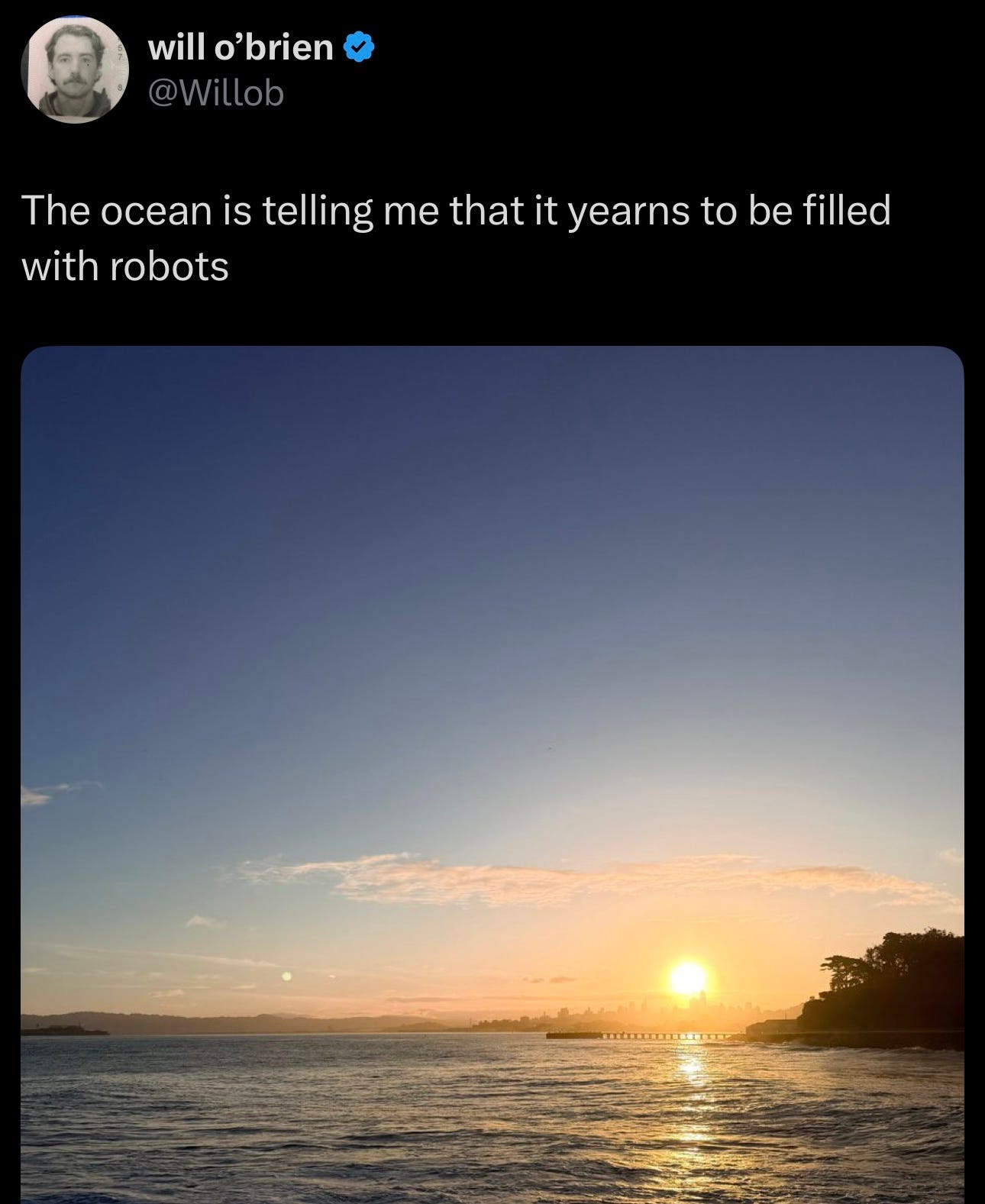
Will, with his big laugh, his embroidered shirt, his cowboy boots, and his list of conspiracy theories, seems almost like a caricature of himself; he is entirely larger than life. But don’t be fooled by his gregarious demeanor: Will O’Brien is building something serious.
The first mission of Ulysses’ fleet of autonomous vehicles is remarkably noble. There is a specific type of seagrass which grows on the coasts and is astonishingly effective at carbon fixation: they store carbon up to 35 times faster than a tropical rainforest. In yet another entry in the endless litany of enviro-pocalypse nightmare statistics, these precious grasses have been dying at a rate of 7% per year, or two football fields every hour. Replanting these grasses by hand via human divers is about as effective as trying to cool your data center with a box fan. For the Ulysses fleet, it’s a piece of cake. One can imagine a sort of Pixar scenario: schools of wide-eyed little ocean robots venturing to the depths of the California coast, befriending the woebegotten seagrasses and their brightly-hued flora and fauna companions, the entire entourage bopping along to a soundtrack composed by Pharrell Williams.
But Ulysses vehicles are not merely Thunberg apparatuses: they’re a bit less Nemo, a bit more shark. A Ulysses autonomous vehicle looks a bit like some kind of compact, oddly-symmetric onyx jet plane: a scaled-down version of the ones in Avatar. Although they’ve started off with ecological restoration, they are swiftly branching out to use the vehicles for commercial and defense purposes. They are, their website states, “building the operating system for the ocean.”
The ocean is, according to Ulysses, humanity’s final frontier. It’s easy to forget that the ocean covers 71% of the earth’s surface. Over 80% of it remains completely unexplored. The deepest parts of the ocean — known as “Hadal depths” — are more difficult to access than the moon. This frontier has largely been ignored by the tech world, busy mining for crypto and building new electronic juicers. Ulysses intends to change that.
Since launching Ulysses in 2023, O’Brien and his three co-founders have scaled from five employees to eighteen. They’ve moved their enterprise from Dublin to San Francisco. They’ve expanded from ecological restoration to commercial and defense applications. This year, they’ll launch their biggest robot ever: Leviathan.
The lair of the ocean cowboys
I visited Ulysses HQ in the late afternoon on a Wednesday. From the outside, tucked away on a side street in SoMa with a sleek but nondescript gray exterior, Ulysses could have been one of any number of the hordes of AI-adjacent startups springing up in the fecund marshes of the mid-2020s Silicon Valley VC bonanza. But as soon as you step through the door, you know something is different: you’ve found yourself in the lair of the ocean cowboys.
The first thing you notice is the twelve-foot shark suspended via wire from the ceiling. The Ulysses headquarters is graced by not one, but two of these massive ceiling sharks, suspended in the air like aquatic zeppelins. There is also an entire school of fish swimming along the ceiling between the rows of desks and the primary meeting room. “We hung those ourselves,” Will tells me proudly.
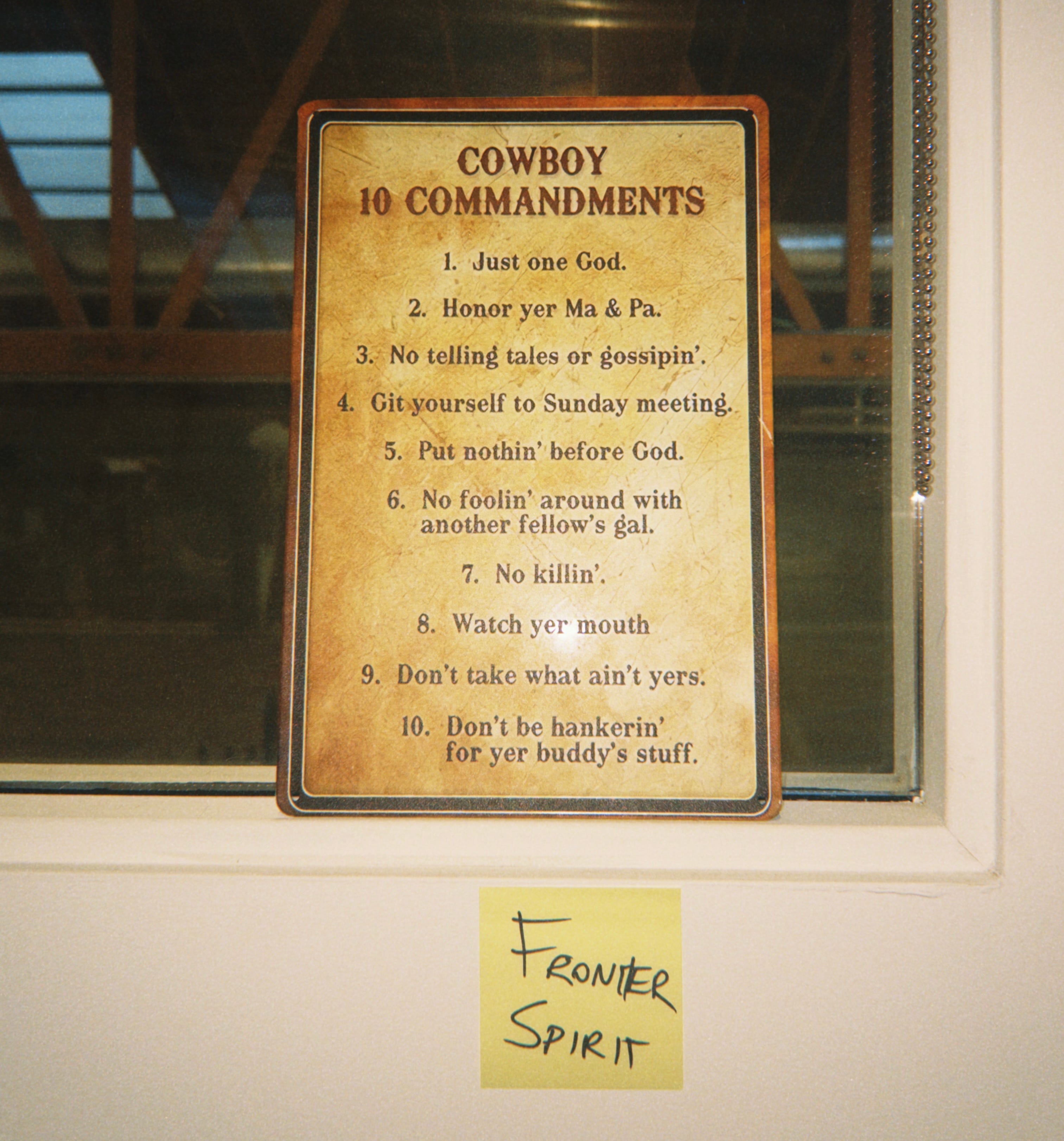
There’s also a portrait of Steve Irwin, the great Australian zookeeper and conservationist, a cartouche with the official Ulysses motto (“Frontier Spirit”), and a list of “Cowboy Commandments” (“Honor yer Ma & Pa”, “Don’t be hankerin’ for yer buddy’s stuff”). On the lower level of the Ulysses Batcave is a swimming pool, next to which is a freestanding crane for lowering the ocean-robots into and out of the water. A twelve-foot American flag hangs from the far wall.
On my way over, Will texted me:
Ill need to get a cake in Whole Foods rn. So if you arrive early I’ll Be back in like 15!
A koan, of sorts.
By the time I arrived, the birthday cake had been devoured, save for a single, chocolatey slice. Nothing like a good day of robot-building to whet a man’s appetite.
When I met Will at the party last year, I saw right away that he was a sort of social magnet: drawing all the assorted iron filings around him into orbit. This is also the role he plays in his company. He’s the mascot, the spokesperson, the visionary. He’s the guy who gets everyone else onboard. Once a month, Ulysses hosts a pizza night for all of its engineers. You’d better believe that Will is there in the thick of it, apron at the ready, wrangling gallon-jugs of tomato sauce while laughing his uproarious laugh. At the end of last year, Ulysses hosted a rodeo, complete with bull-riding. Except the bull was — you guessed it — a mechanical shark.
The new aquatic frontier
The American Frontier was officially declared to be closed in 1860. This event, according to various theorists, instigated a spiritual crisis from which we have yet to recover. America was founded upon the principle of expanse, of conquest, of the promise of the wide horizon. Since 1860, when this firehose of energy could no longer seek an outlet in the West, it has been forced to seek out other avenues: fighting the two European wars, policing the 20th century international political order, conquering the digital frontier.
New York Times columnist and podcast host, Ross Douthat, has written extensively on the phenomenon of American decadence. Douthat’s thesis is that, since the 1950s, the nation’s best and brightest minds have turned away from the material world and towards a dream-sequence sidequest of building out the infrastructure of the digital simulacrum. This simulacrum has become fantastically powerful and complex. Meanwhile, cities get uglier, highspeed rails go unbuilt, and even Elon dares not venture into the market for the flying car. “We wanted flying cars,” the proverbial Thiel quip goes, “instead we got 140 characters.”
Different tech oligarchs have different theories regarding what, exactly, the “next frontier” will be. Elon and Bezos think it’s space. The LLM-lords think it’s AGI. Brian Johnson thinks it’s the pursuit of immortality. Zuck thinks it’s the 3D rendering of the real world that we’ll all strap into via headset.
Most of these new frontiers exist beyond us; either above us in space, or locked in the recesses of an obscure new algorithm. But Ulysses thinks the new frontier is right beneath our feet, in the hundreds of millions of square miles of uncharted territory covering the surface of our planet. And now, their team is moving fast, building the technology that has the potential to unlock a whole new domain of human activity.
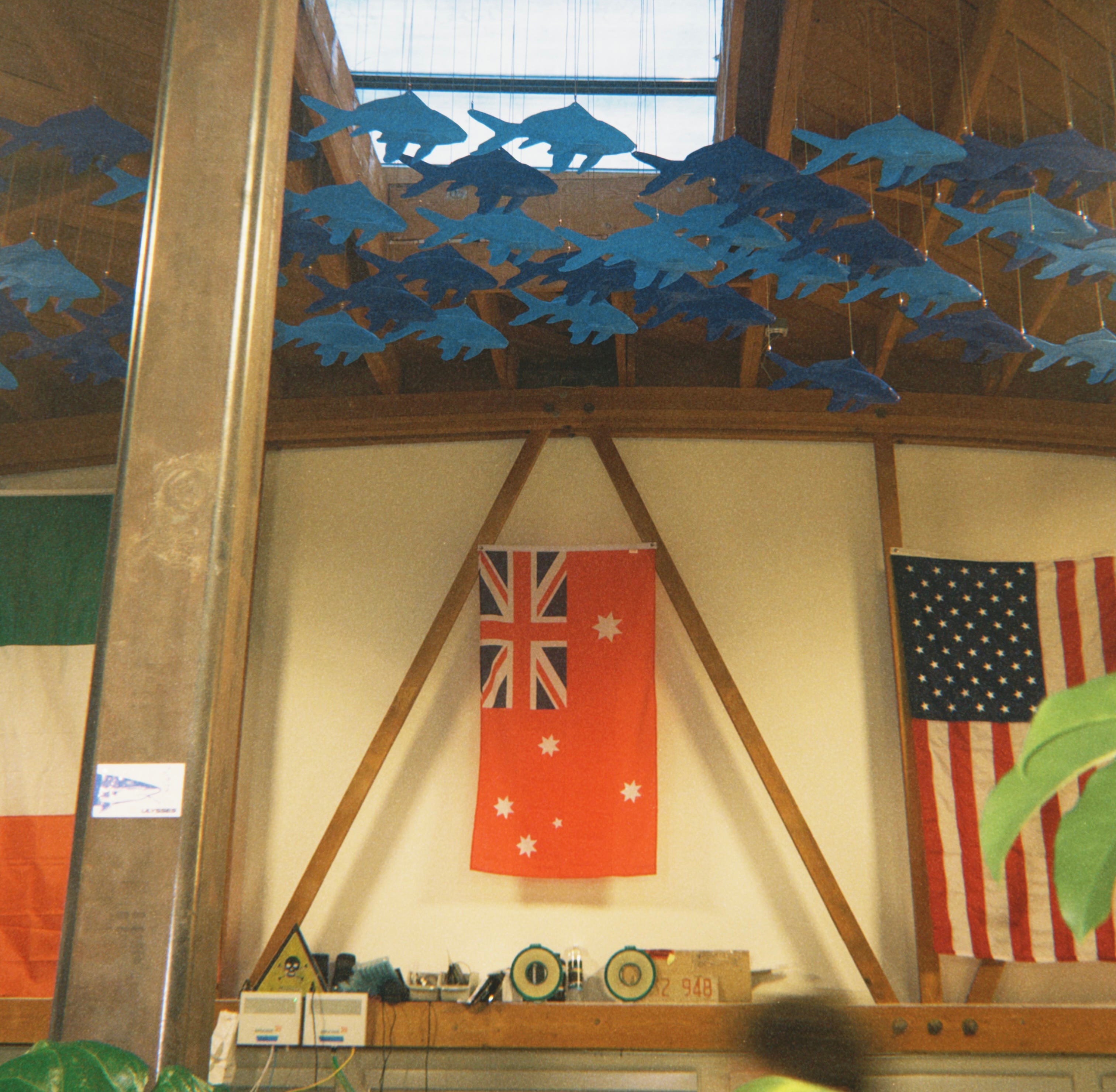
It’s funny. Ulysses, although founded in Dublin, with its frontier spirit, its Cowboy Commandments, its shark rodeo and gargantuan American flag emblazoned on the wall, might just be the most American company I know. And although he’s a consummate patriot, Will O’Brien, who arrived from Dublin just over a year ago, might be the most stereotypical instantiation of the American spirit I’ve ever encountered.
Which brings us to a broader question about culture. There’s a strange phenomenon where sometimes the most enduring cultural artefacts end up being created by people outside of the culture itself: the Scottish kilt invented by an Englishman, the modern pizza perfected in New York City, the White House designed by an Irishman, and the iconic horned viking helmets created by a German costume designer for a production of Wagner’s Der Ring des Nibelungen. There is a sort of cultural distillation, a consolidation, perhaps, that happens when the iconography of a culture is co-opted by someone from the outside: it can become, in some cases, more fully chosen, fully inhabited, fully adopted, than when one is born into it. To those of us inside a culture, it’s like water to a fish. Sometimes it takes someone on the outside to see it clearly.
But perhaps, even in the strictest sense, Ulysses is as American as you can get. Ulysses and its founders are immigrants, like most of us were at one point or another in this country of transplants. Like most of our grandparents did at some point, Ulysses and its founders have come to seek the next great frontier, and are attacking it with energy and enthusiasm.
When I met Will at the party last year, he was bursting with explosive energy. Today, he’s a bit quieter, more subdued. Coasting between the Whole Foods cake run and yet another late night of work. He’s easy to talk to, easy to be around. Will, unlike some young founders who have rapidly attained his degree of success, seems to feel no need to project an aura of righteous self-importance or overbearing potentiality. He’s just a nice guy. With a lot of sharks.
What is it to be American, anyway? Well, as anyone can attest, hardly one thing in particular. And yet, in this uprooted, cultureless, consumerist void of ours, which philosophers like Simone Weil have blamed for spreading the disease of hyperinstrumentalization throughout the entire globe, there is also a sort of bigness of spirit, an eyes-to-the-horizon sort of attitude that drew people here in the first place.
California is, at its worst, the vacuum of the SF cultural scene, the ugliness of the AI-billboard bonanza as you drive 101-South towards SFO, the Pandora’s box of attention-bending instruments our technologists-in-chief have unleashed upon the globe. But it is also the California of the bluffs and the bay, the sheer scale and expanse of the Pacific, a pool of relative anarchy and meritocracy in contrast to the fixed social orders of the Old Worlds back East. The poet Robinson Jeffers once wrote that California is the “end of civilization.” But it is also, at the same time, the beginning of a new history: the history of this strange new technological epoch whose features are only beginning to take shape.
Will O’Brien represents, I think, the legacy of this latter half of things: a sort of 21st century transplant from a bygone era, someone who is willing to take up the mantle of destiny and shape the world in the way he sees fit. California, for all its dysfunction, is a place where things still happen. And that, I think, is a pretty good thing.
great write up, summed up will as well as anybody
Incredible piece! You are a great writer! So rare in today’s age. 🔥